
The Types of Tea
The Six Types of Tea
Generally speaking, the vast majority of teas are made from the Camellia Sinensis plant. A small number are also created from the leaves of the Camellia Taliensis (an example is our Forest Punch black tea) which also called Yunnan Big Leaf and is native to Yunnan; and more recently also Camellia Crassicolumna. The latter has no caffeine and may prove to be an viable alternative in producing naturally caffeine-free teas.
From this plant spring a multitude of varieties (natural) and cultivars (human-made). Natural varieties evolve to thrive in a particular terroir and cultivars have been created to improve growing and flavour profile characteristics.
The six types of teas are:
White, Green, Yellow, Oolong, Black and Dark. The tea type is determined by the level and type of processing and they are usually ordered in this way to indicate the level of processing, white being the least, black/dark teas being the most processed.
Processing
Processing methods or steps can include: withering, oxidation, rolling or bruising, fixation or “killing the green”, drying or firing/roasting and fermentation. Some teas will go through only a couple of stages of processing while others go through many. It is important to note that processing does not involve any addition of external ingredients or additives but rather the skilful application of traditional techniques which transform the raw leaves into one of the six tea types. The final resulting taste, colour, shape and aroma of the tea will indicate where it sits in the spectrum of teas.
White Tea
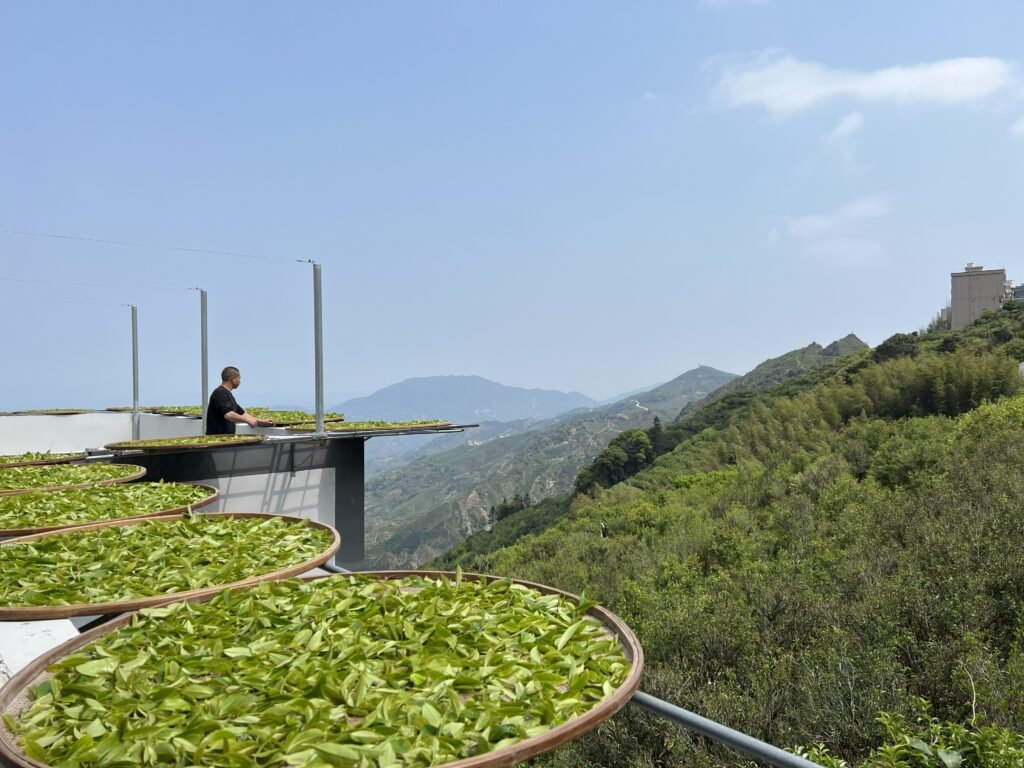
White tea is the least processed type of tea. Generally it is only withered for up to 48 hours or longer and then dried. The extensive withering relies on the plant’s enzymatic and metabolic processes- in response to having been plucked from the tree or bush – to produce a strong fruity and/or floral aroma, enhance a sweet or savoury taste, and reduce astringency.
Green Tea
Yellow Tea
Oolong Tea
Black Tea
Dark Tea

“There is something in the nature of tea that leads us into a world of quiet contemplation of life.” – Lin Yutang, The Importance of Living